workiz
tipping experience redesign & Payment Flow Revamp
tipping experience redesign & Payment Flow Revamp
overview
introduction
Workiz is an all-in-one platform for managing home service businesses. It streamlines teams scheduling, payments, and job management in the field and back office.
Workiz is an all-in-one platform for managing home service businesses. It streamlines teams scheduling, payments, and job management in the field and back office.
In this project, I revamped the tipping user experience of the payment flow and redesigned the UI, which was one of the largest projects at the fintech team that year, and the most successful one- 2× more tips compared to the old experience.
In this project, I revamped the tipping user experience of the payment flow and redesigned the UI, which was one of the largest projects at the fintech team that year, and the most successful one- 2× more tips compared to the old experience.
my role
I led the end-to-end UX and UI design process - from identifying pain points through user interviews and analyzing payment data, to mapping new user flows and creating the final interface design. I collaborated closely with product managers, developers, and the data team to ensure the new experience aligned with both user needs and technical constraints.
I led the end-to-end UX and UI design process - from identifying pain points through user interviews and analyzing payment data, to mapping new user flows and creating the final interface design. I collaborated closely with product managers, developers, and the data team to ensure the new experience aligned with both user needs and technical constraints.
problem
The tipping experience in the Workiz mobile app was awkward and unintuitive, leading to missed tips and technician dissatisfaction. Card reader usage dropped due to confusion in the payment flow and a lack of alignment with user expectations. Here are the key problems with the core experience:
The tipping experience in the Workiz mobile app was awkward and unintuitive, leading to missed tips and technician dissatisfaction. Card reader usage dropped due to confusion in the payment flow and a lack of alignment with user expectations. Here are the key problems with the core experience:
before redesign
problem #1
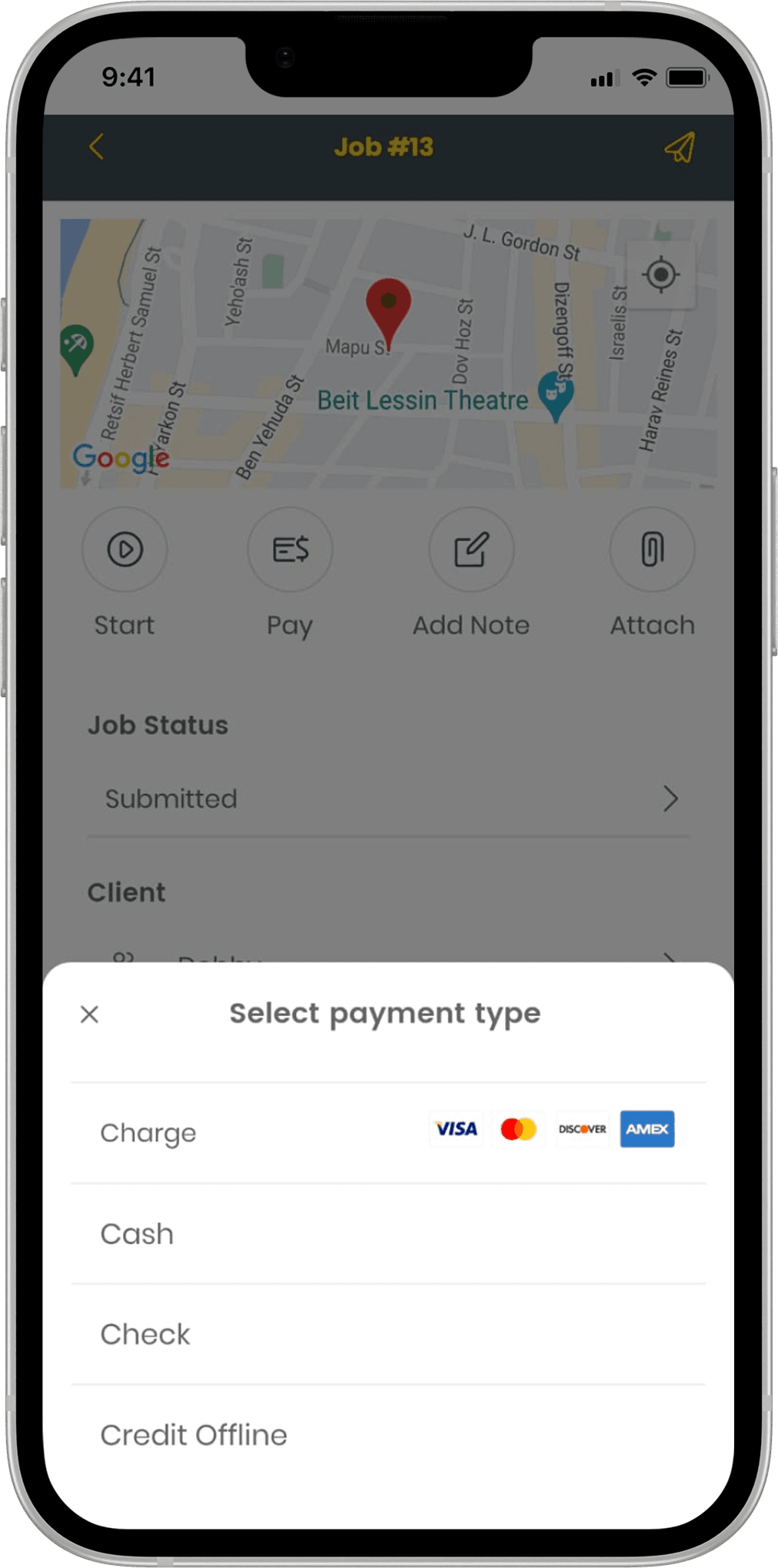
Card Reader Friction
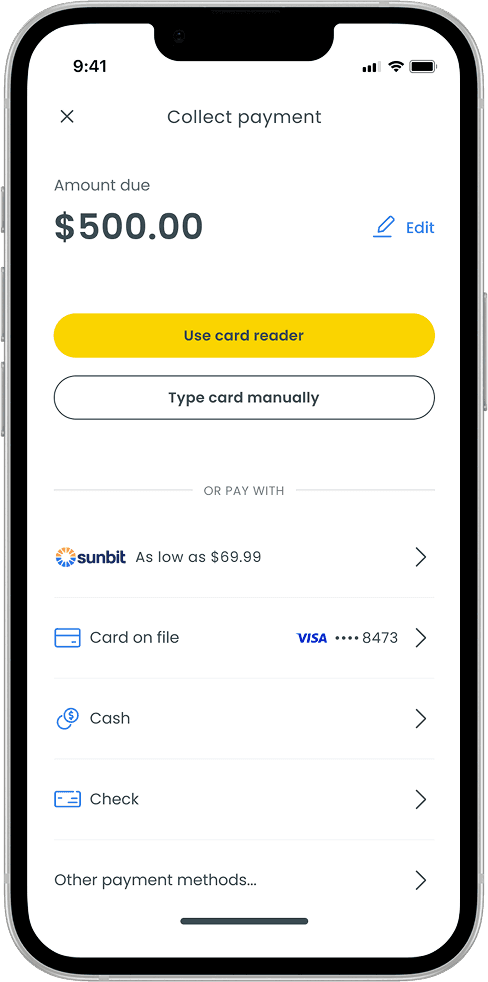
The card reader option was hidden behind the “Charge” button, rather than listing it with other payment methods. This didn't align with user expectations and led many technicians to stop using it altogether.
The card reader option was hidden behind the “Charge” button, rather than listing it with other payment methods. This didn't align with user expectations and led many technicians to stop using it altogether.
before redesign
problem #2
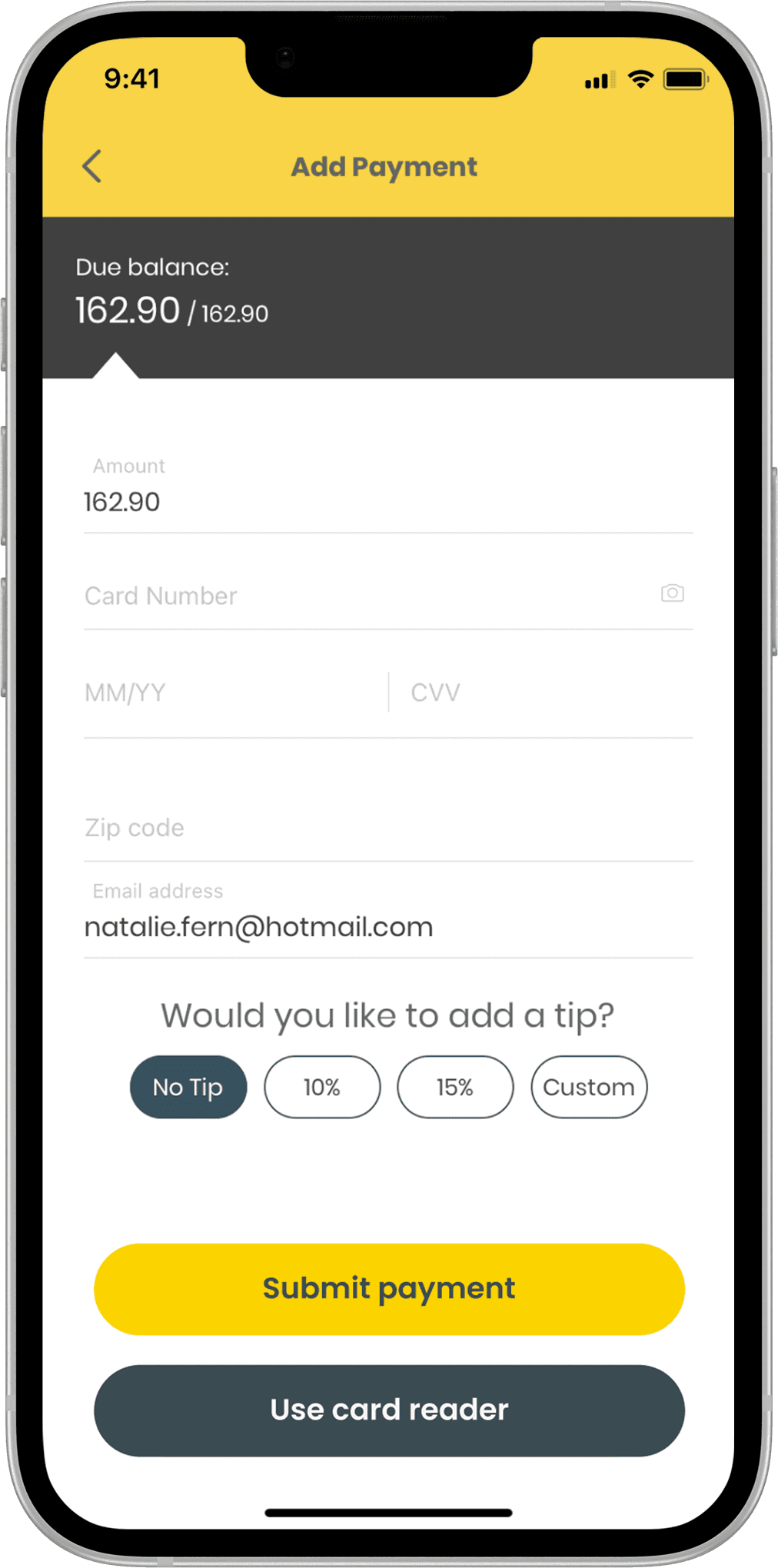
Awkward Tipping Presentation
The tipping option was awkwardly presented on the same screen where technicians enter their clients' card details, making it uncomfortable to ask for a tip. and tipping wasn’t integrated into the card reader flow.
The tipping option was awkwardly presented on the same screen where technicians enter their clients' card details, making it uncomfortable to ask for a tip. and tipping wasn’t integrated into the card reader flow.
problem statement
To write a focused, user-centered problem statement, I used the:
‘ [A user] needs [need] in order to accomplish [goal] ’ structure:
To write a focused, user-centered problem statement, I used the: ‘ [A user] needs [need] in order to accomplish [goal] ’ structure:
Technicians using Workiz need a more intuitive and transparent tipping & payment flow in order to avoid confusion during client transactions and ensure a seamless, professional experience that matches market standards.
Technicians using Workiz need a more intuitive and transparent tipping & payment flow in order to avoid confusion during client transactions and ensure a seamless, professional experience that matches market standards.
goals
user goals
Technicians want to collect payments confidently without awkward moments, while customers want to complete payment and tipping quickly and comfortably.
Technicians want to collect payments confidently without awkward moments, while customers want to complete payment and tipping quickly and comfortably.
business goals
Increase successful payment completions and tip revenue by creating a smoother, more trustworthy tipping experience - without requiring backend changes or complex setup.
Increase successful payment completions and tip revenue by creating a smoother, more trustworthy tipping experience - without requiring backend changes or complex setup.


process
user feedback
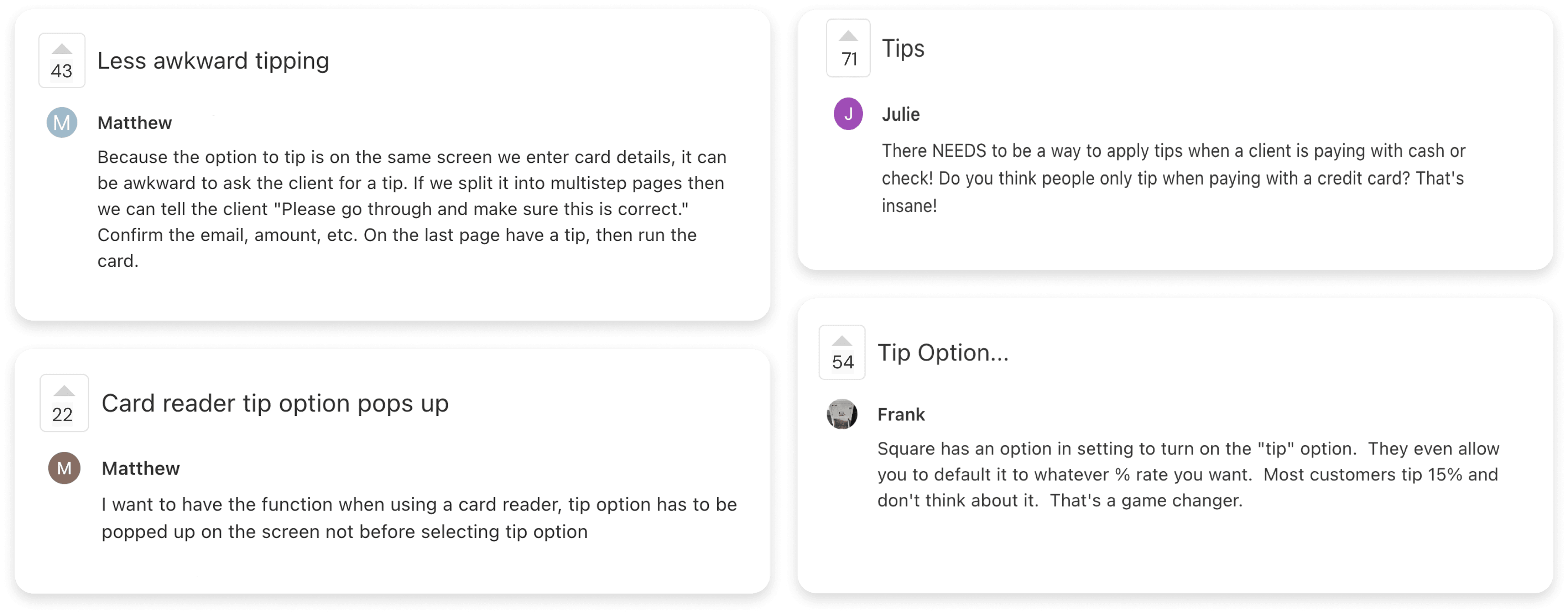
To better understand the pain points, I reviewed dozens of user comments on Canny - Workizs Feature Requests channel:
To better understand the pain points, I reviewed dozens of user comments on Canny - Workizs Feature Requests channel:
user interviews
I conducted in-depth interviews with several technicians who regularly collect payments in the field. The goal was to map their experience from job completion to payment collection and tip interaction, and identify gaps between our current product and their expectations. here are some key insights:
I conducted in-depth interviews with several technicians who regularly collect payments in the field. The goal was to map their experience from job completion to payment collection and tip interaction, and identify gaps between our current product and their expectations. here are some key insights:
Tipping felt unclear and awkward
Technicians felt uncomfortable asking for tips due to the way tipping was embedded in the payment screen, making the process feel forced and unprofessional.
Technicians felt uncomfortable asking for tips due to the way tipping was embedded in the payment screen, making the process feel forced and unprofessional.
The flow didn’t meet user expectations
Both technicians and clients expected a smoother, more familiar tipping experience - similar to what platforms like Square offer, where the tip is clearly separated and self-guided.
Both technicians and clients expected a smoother, more familiar tipping experience - similar to what platforms like Square offer, where the tip is clearly separated and self-guided.
Poor experience impacted technician income
Unclear flow and customer confusion led to missed tips, which directly affected technicians' earnings and created frustration.
Unclear flow and customer confusion led to missed tips, which directly affected technicians' earnings and created frustration.
market research
Then, I conducted a comparative analysis of how tipping and mobile payments are handled by both direct and indirect competitors-including ServiceTitan, Jobber, Housecall Pro, and Hubspot. as well as consumer-first platforms like Square and Stripe for user conventions behaviors & interactions. here are some key insights:
Then, I conducted a comparative analysis of how tipping and mobile payments are handled by both direct and indirect competitors-including ServiceTitan, Jobber, Housecall Pro, and Hubspot. as well as consumer-first platforms like Square and Stripe for user conventions behaviors & interactions. here are some key insights:






Clients expected tipping after card tap
Products like Square and Stripe offer tipping after the card is tapped -a familiar, seamless flow that users have come to expect.
Products like Square and Stripe offer tipping after the card is tapped -a familiar, seamless flow that users have come to expect.
Current setup didn’t support the market convention flow
Due to technical limitations, tips had to be selected before the card was processed, which went against user expectations and felt unnatural.
Due to technical limitations, tips had to be selected before the card was processed, which went against user expectations and felt unnatural.
The UX had to bridge expectation and reality
The design challenge was to create an intuitive flow that felt modern and smooth, while still working within Stripe’s backend constraints.
The design challenge was to create an intuitive flow that felt modern and smooth, while still working within Stripe’s backend constraints.
new user flow
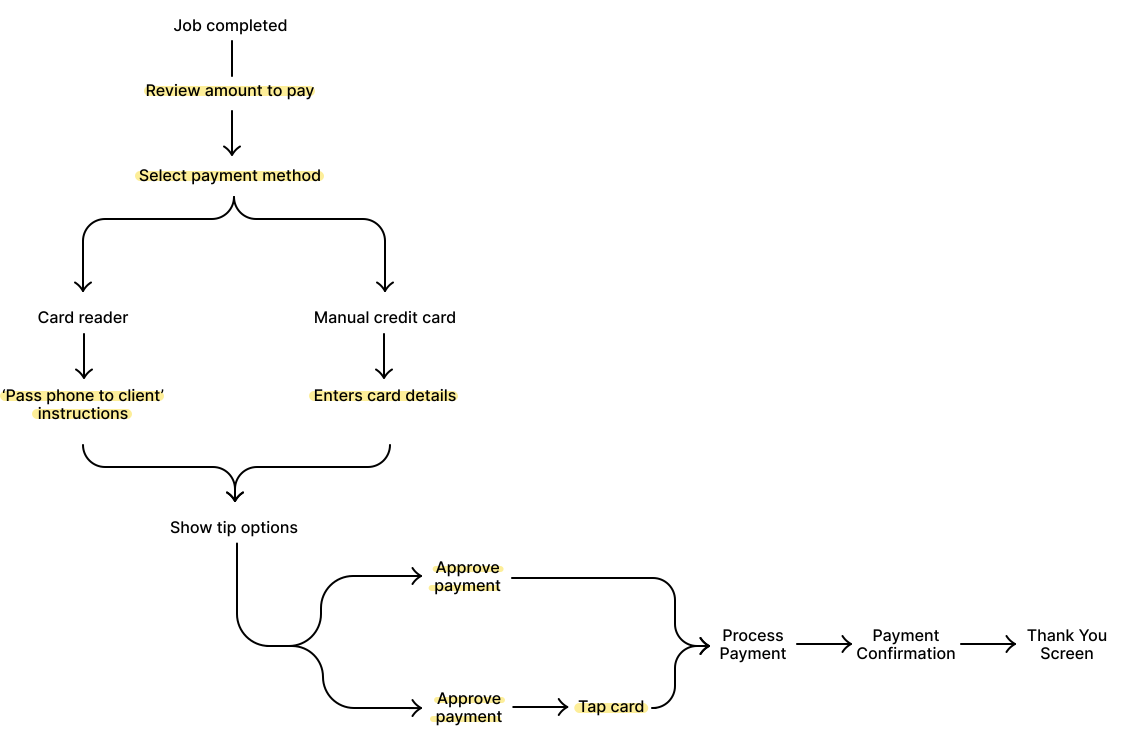
I created a new user flow based on all the insights and user feedback:
design
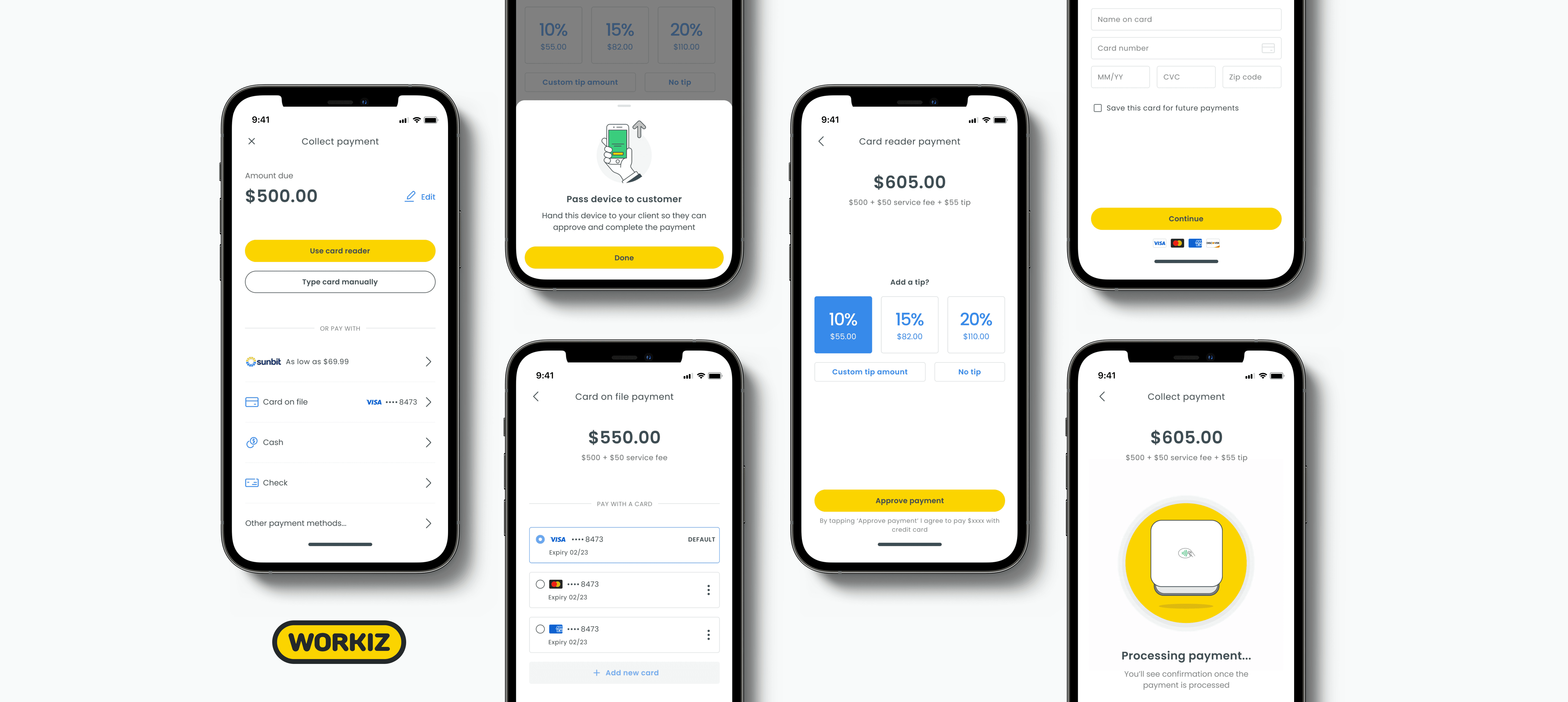
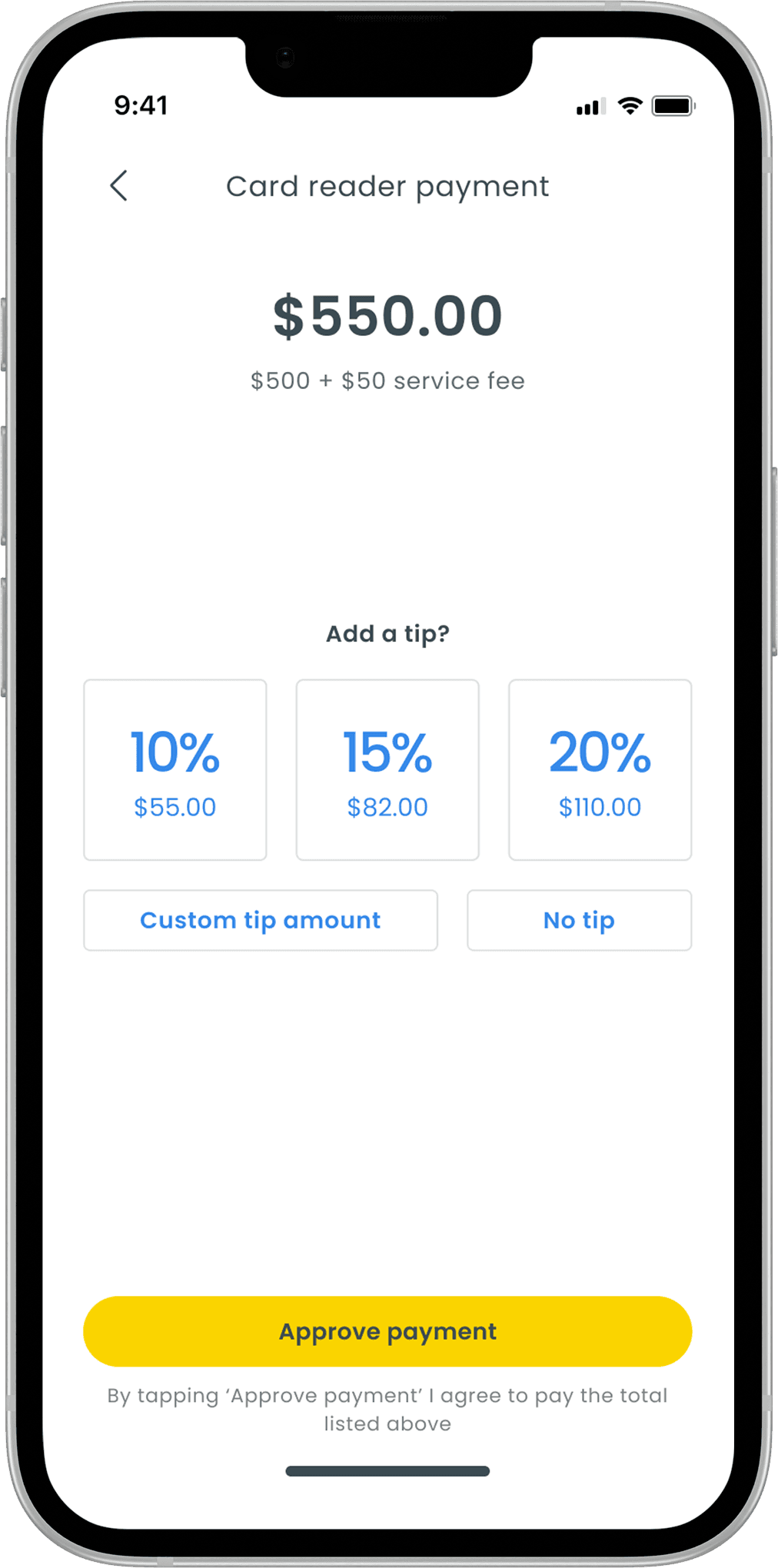
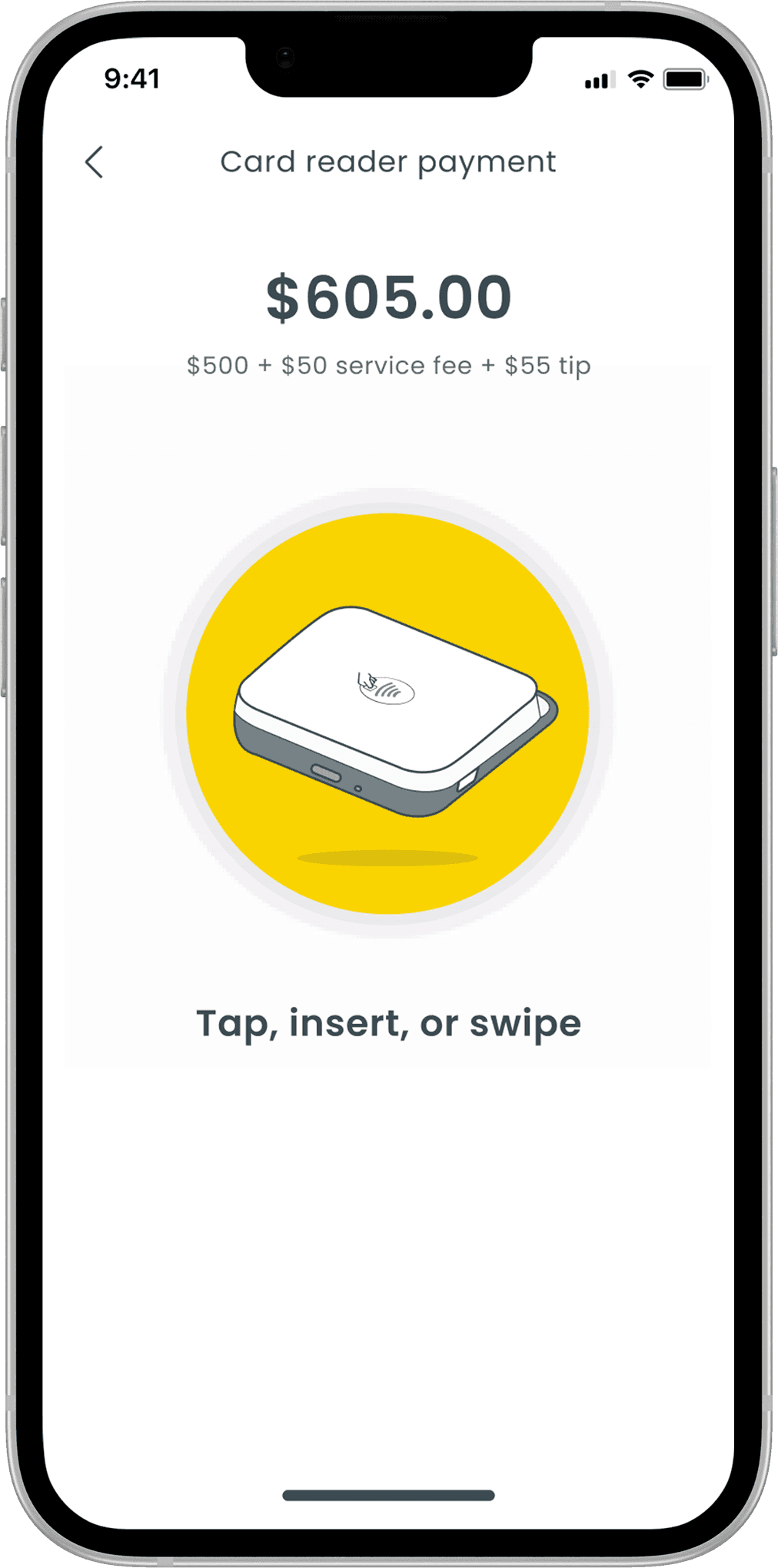
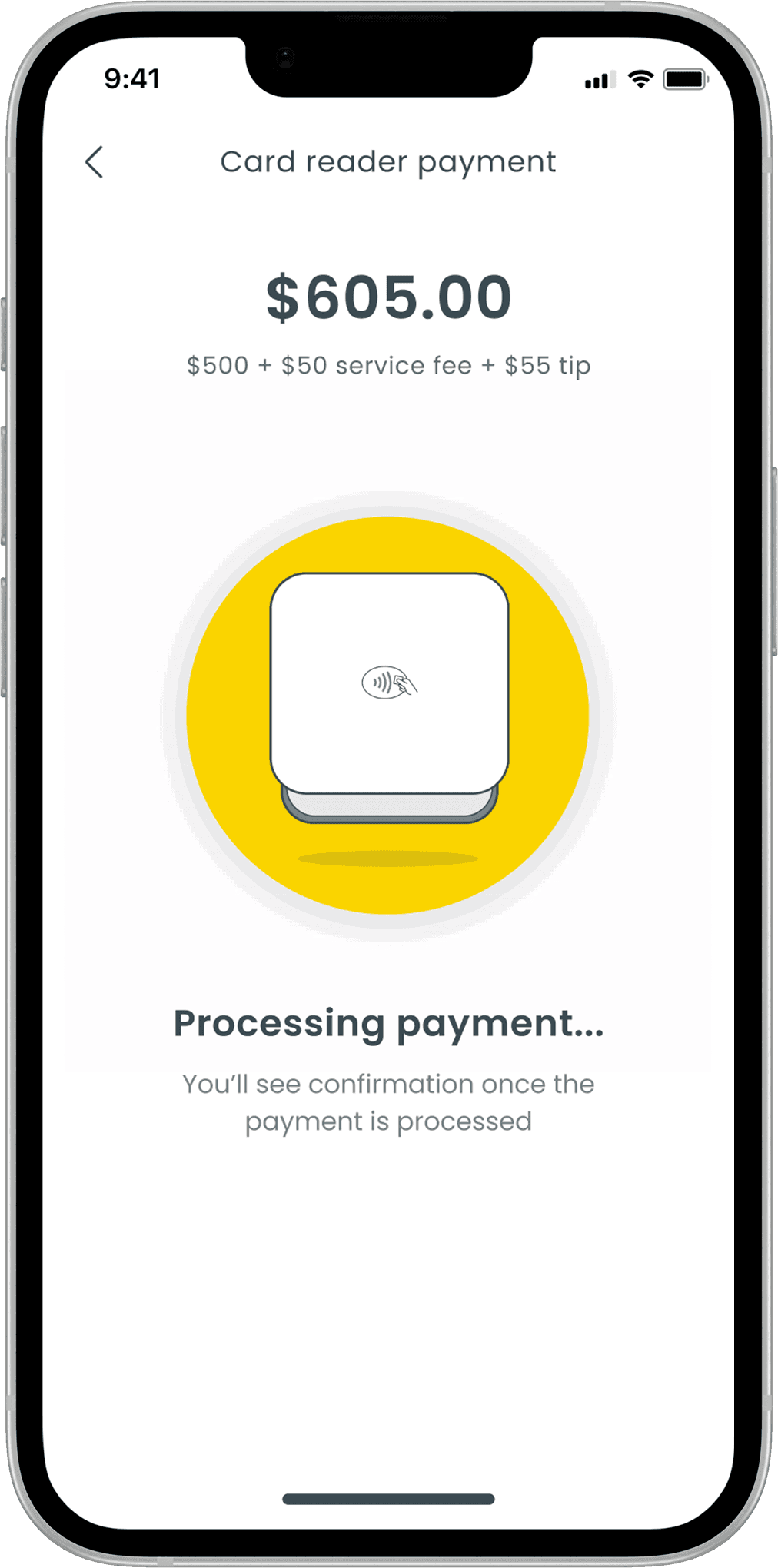
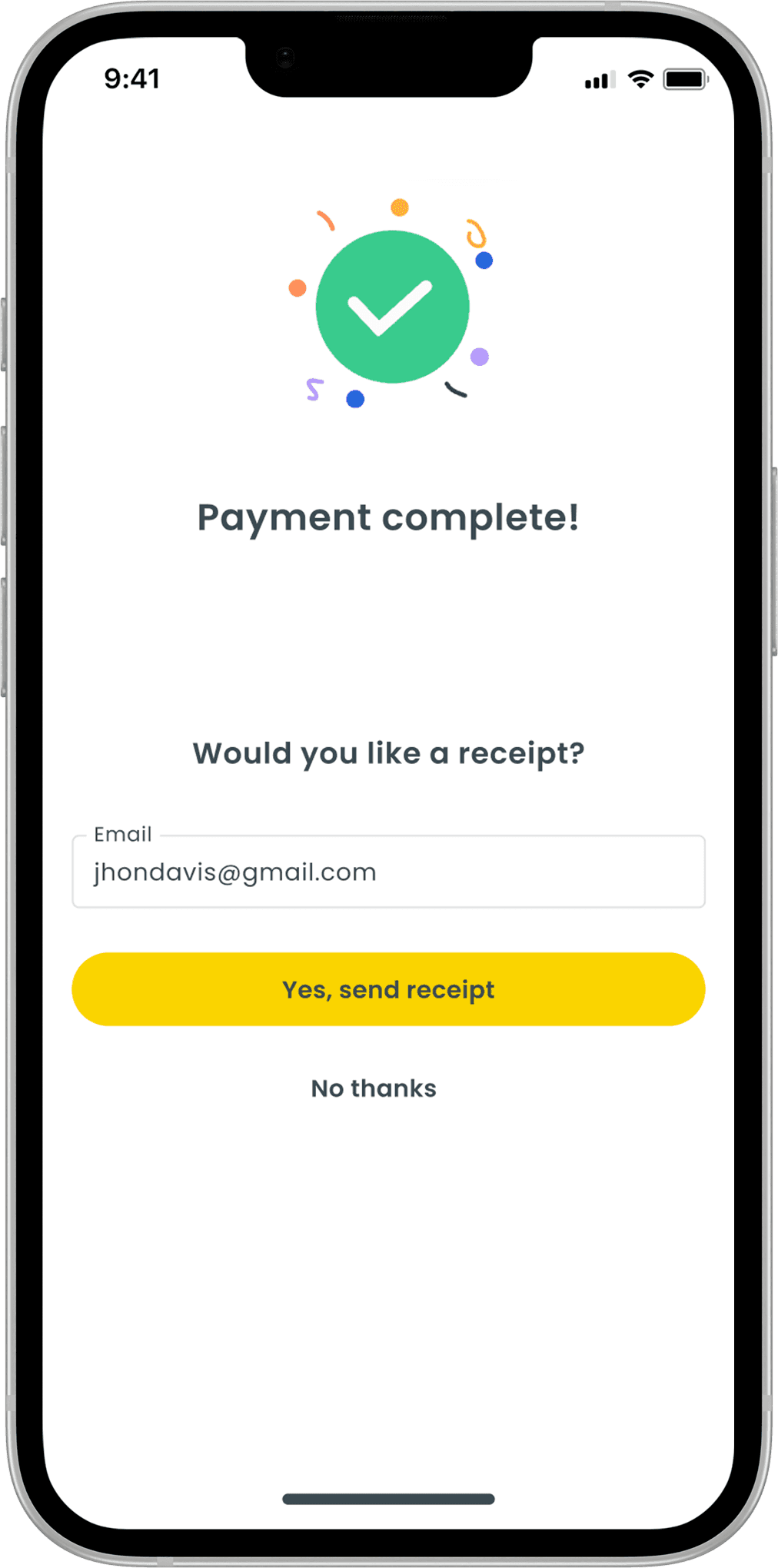
Card reader payment flow
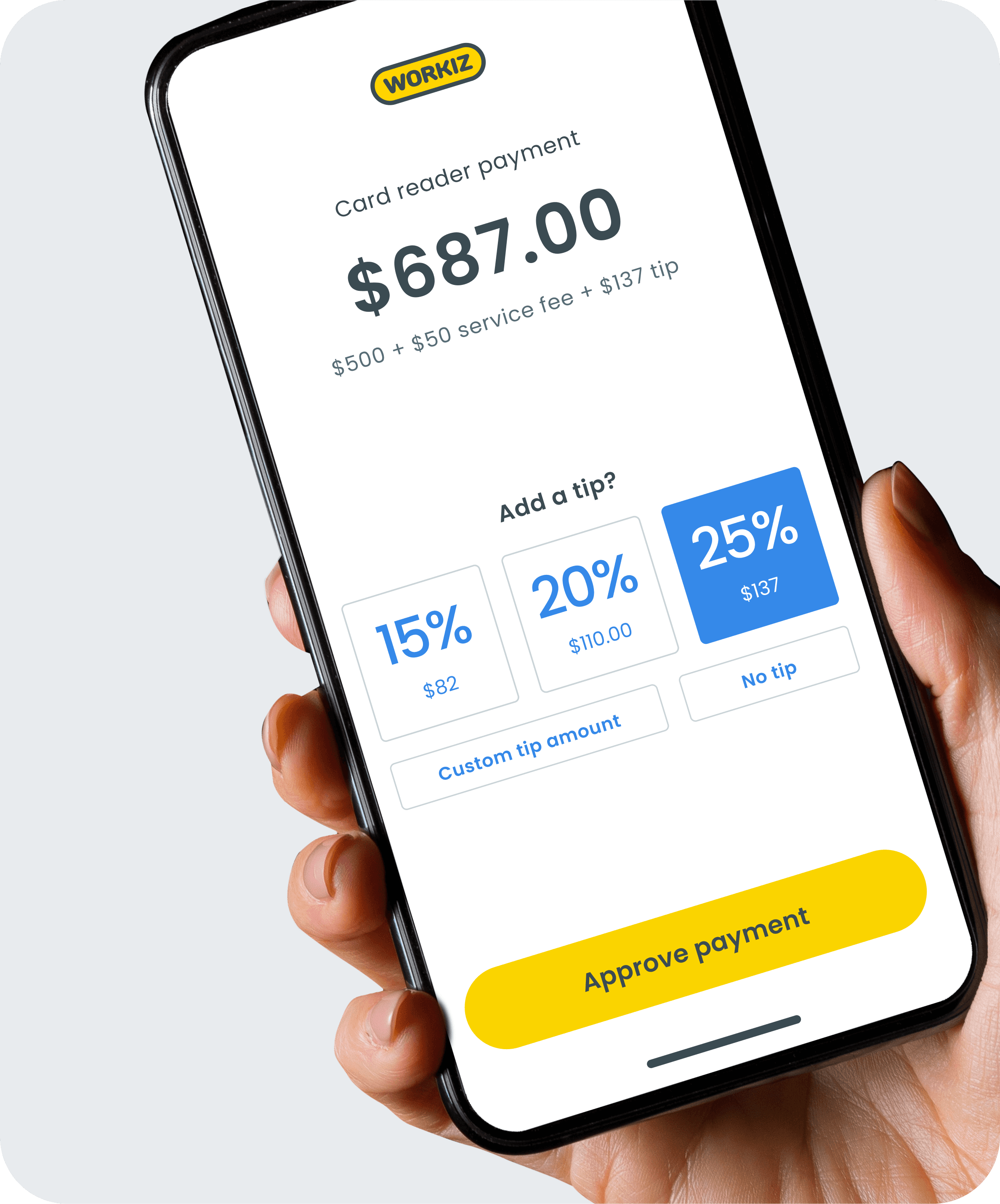
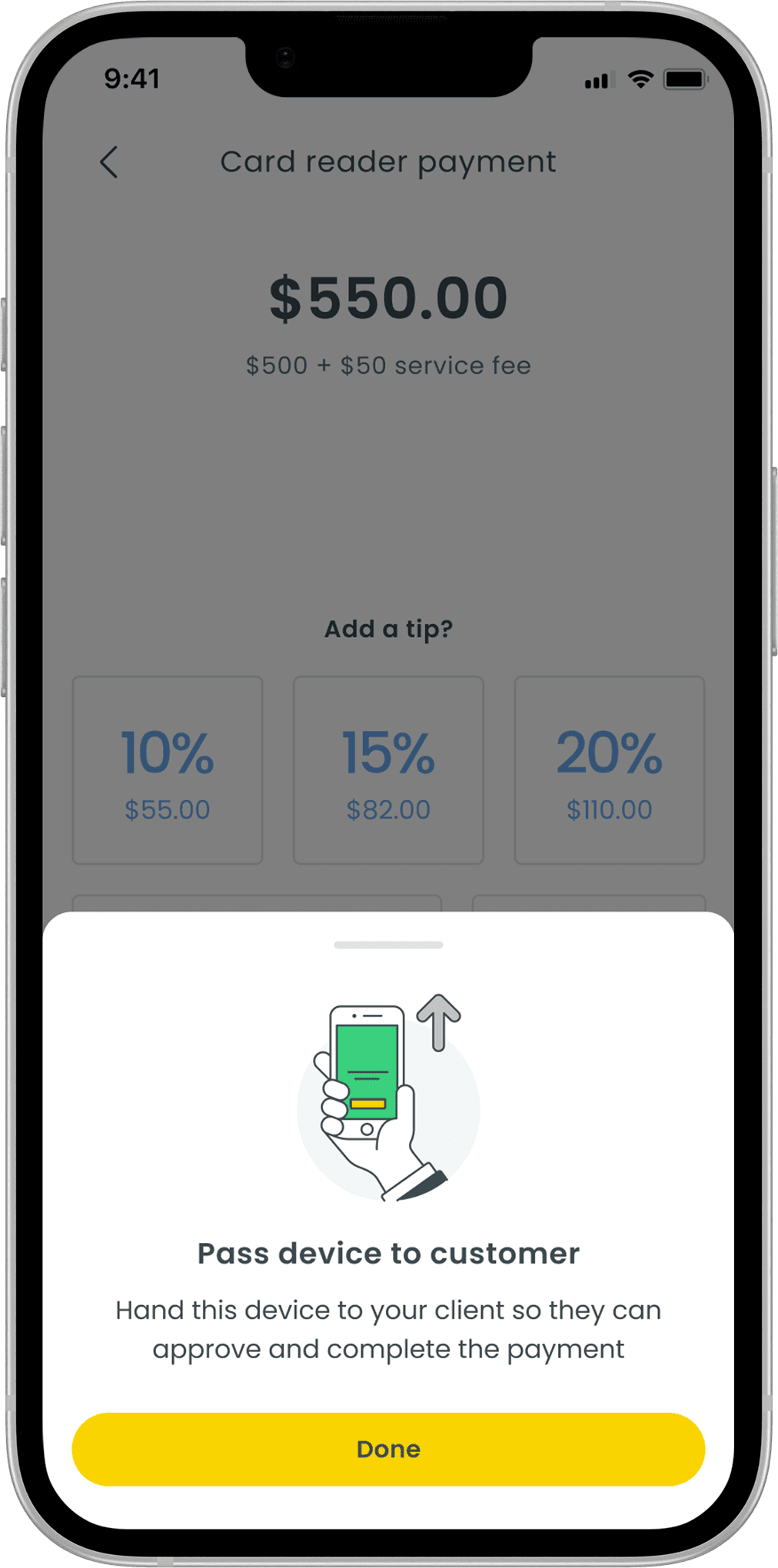
In this flow, clients are prompted to select a tip before tapping their card - ensuring the process feels seamless and intuitive. This mirrors familiar POS experiences (like Square), where the customer completes tipping first, then finalizes payment with a simple tap.
In this flow, clients are prompted to select a tip before tapping their card - ensuring the process feels seamless and intuitive. This mirrors familiar POS experiences (like Square), where the customer completes tipping first, then finalizes payment with a simple tap.
New behavior Prompt
To help technicians adopt the new flow and feel confident using it in front of customers, I added a subtle “Pass device to customer” prompt. This microcopy sets clear expectations and guides technician behavior in real time, preventing awkward moments during payment.
To help technicians adopt the new flow and feel confident using it in front of customers, I added a subtle “Pass device to customer” prompt. This microcopy sets clear expectations and guides technician behavior in real time, preventing awkward moments during payment.
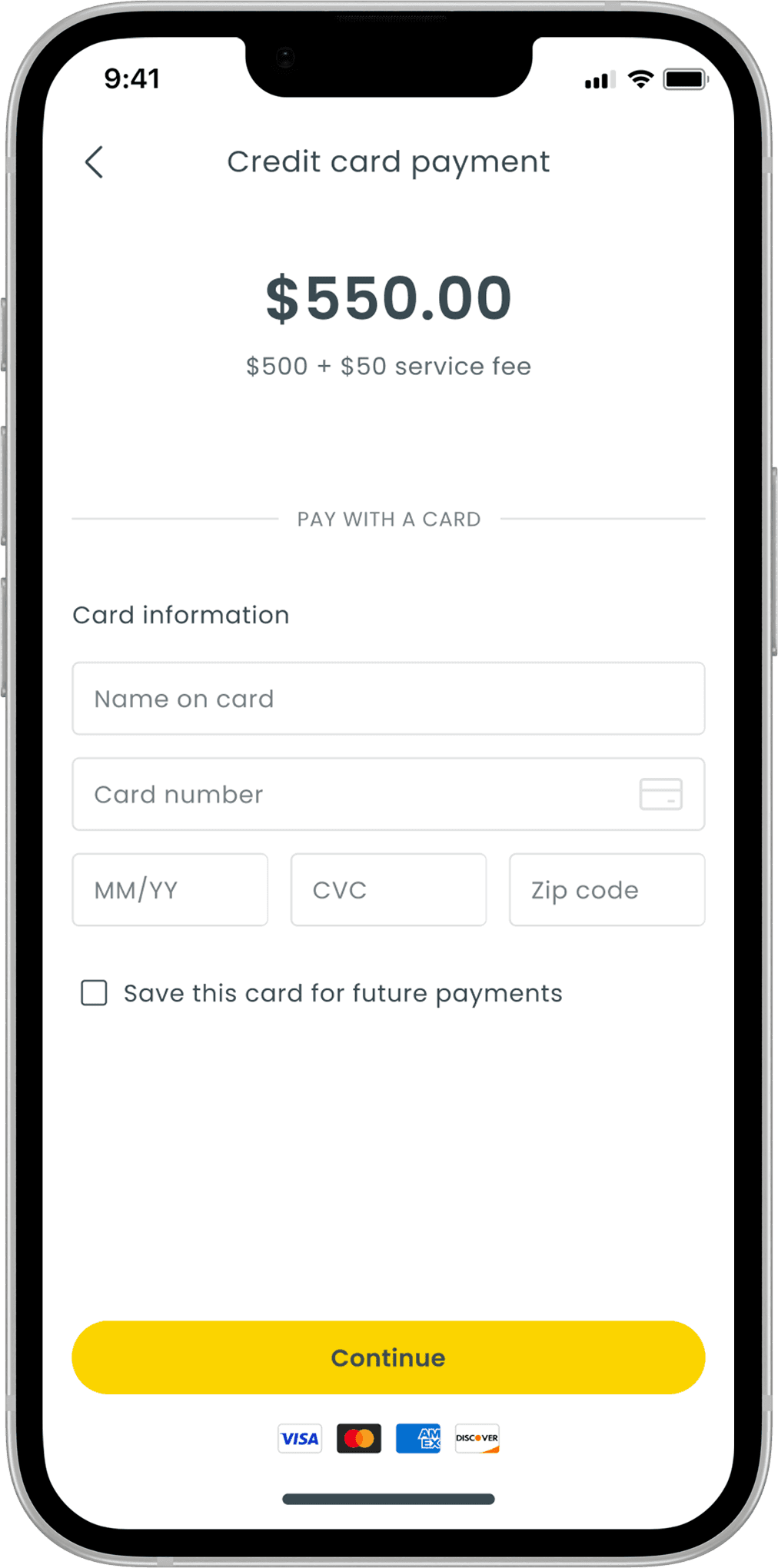
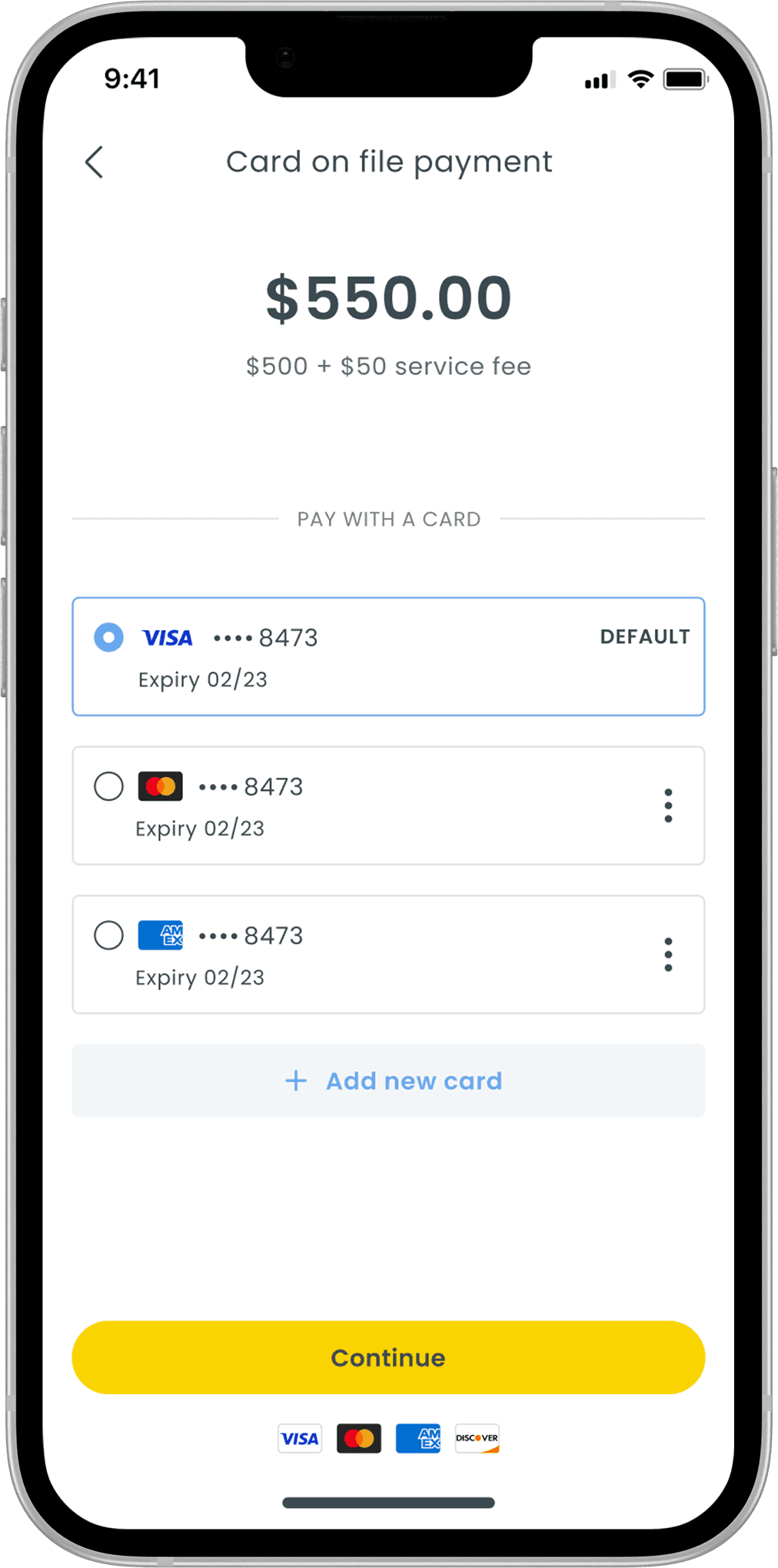
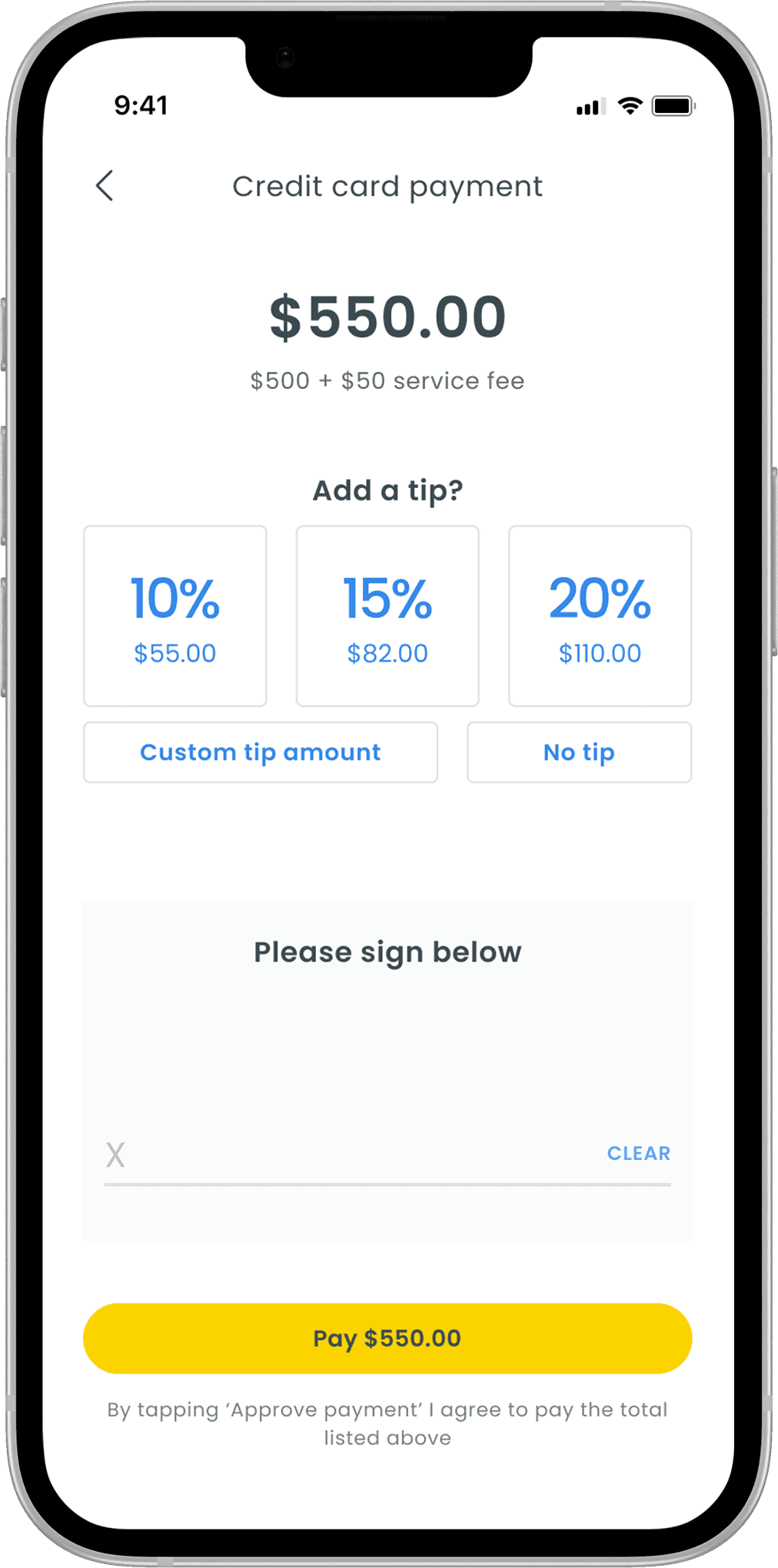
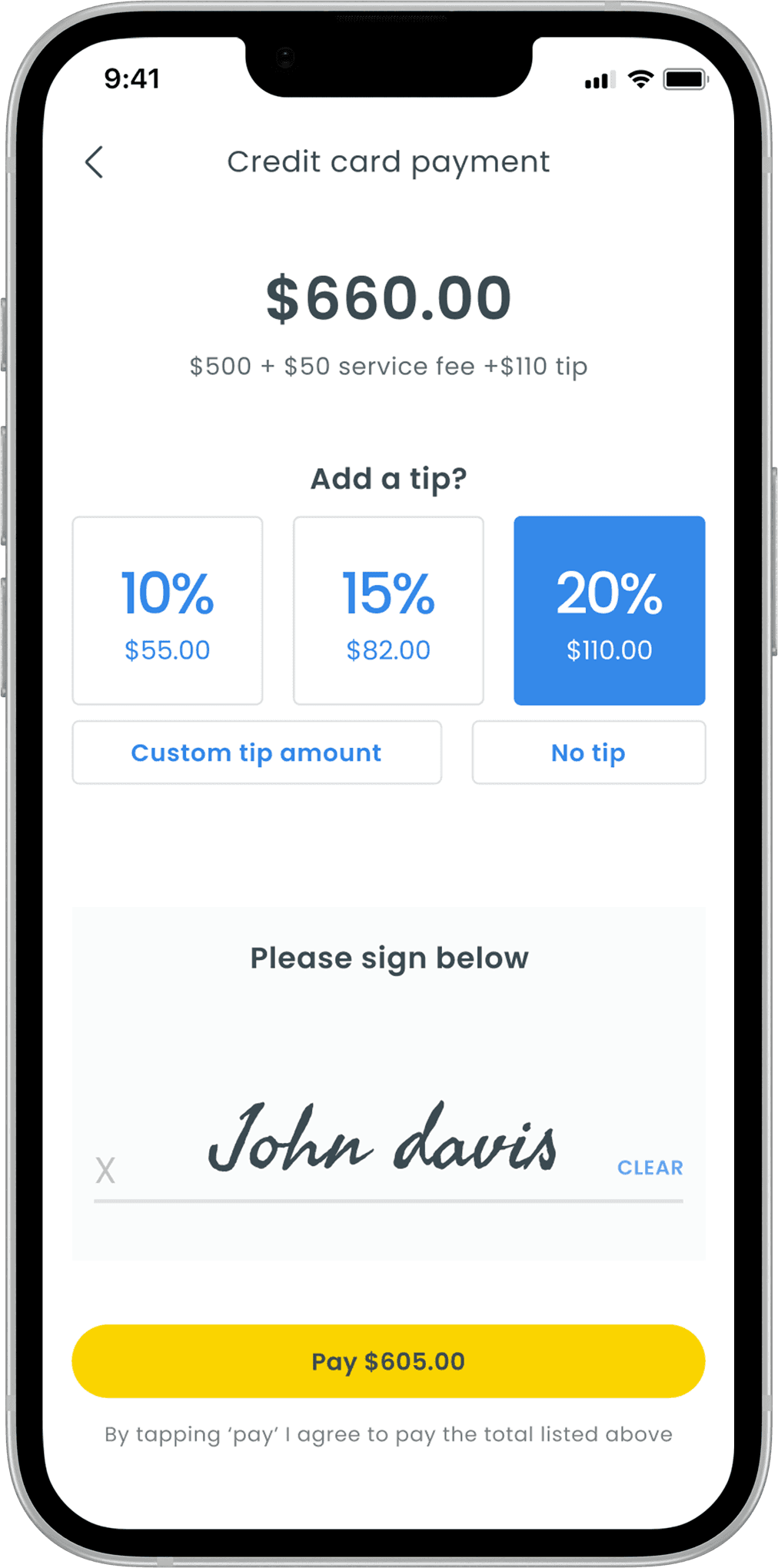
Manual & card on file payment flow
Here, clients first enter their credit card details or confirms the saved card on file, and only after that, the tipping screen appears. This sequence was designed to accommodate Stripe’s technical limitations while still maintaining a smooth and consistent user experience.
Here, clients first enter their credit card details or confirms the saved card on file, and only after that, the tipping screen appears. This sequence was designed to accommodate Stripe’s technical limitations while still maintaining a smooth and consistent user experience.
Results
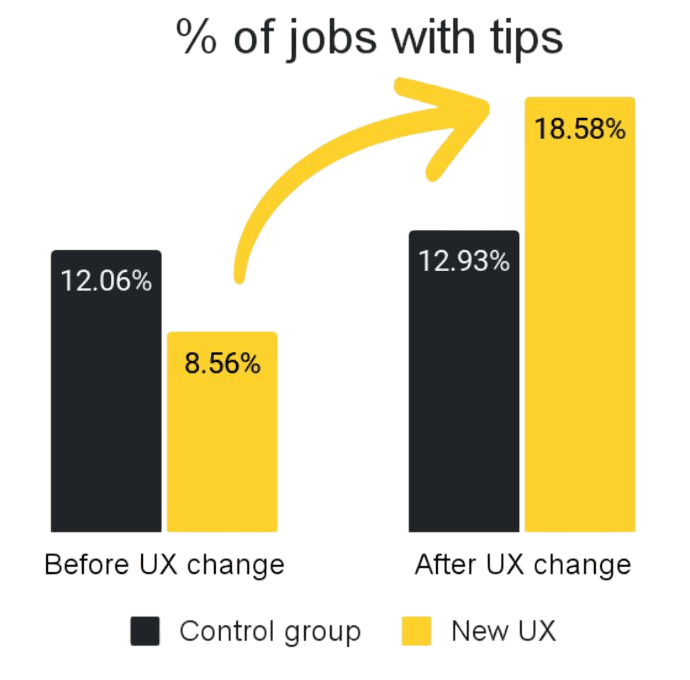
2× more tips compared to the old experience
Users who experienced the new payment flow left 2× more tips compared to the old experience and approximately 45% more than the control group-proving the impact of intuitive UX on real business outcomes.
Users who experienced the new payment flow left 2× more tips compared to the old experience and approximately 45% more than the control group-proving the impact of intuitive UX on real business outcomes.
Customer Feedback
In addition to analytics, we proactively collected feedback from technicians and customers. The responses confirmed that the new design significantly improved the overall experience and eliminated the friction in the tipping process.
In addition to analytics, we proactively collected feedback from technicians and customers. The responses confirmed that the new design significantly improved the overall experience and eliminated the friction in the tipping process.


The new payment flow is much smoother and more intuitive - especially when using the card reader with clients.”
The new payment flow is much smoother and more intuitive - especially when using the card reader with clients.”
We were actually considering switching to Clover because of how clunky the old flow was. This redesign changed everything."
We were actually considering switching to Clover because of how clunky the old flow was. This redesign changed everything."
The new interface is so much clearer - even our older clients find it easier to use."
The new interface is so much clearer - even our older clients find it easier to use."
see other projects
see other projects
workiz
product navigation redesign
anywyse
aI audio learning platform
matya
AI Conversational Data Collection